
What a Ration Lab nutrition plan looks like
This is the PDF your client receives. It is short, about 5–6 pages, and written in plain English. It carries your clinic’s branding.
The sample below is an example. It was written for an invented dog and contains no real patient or client details.
1. It looks like it came from your clinic
Your clinic’s name and logo sit at the top of the plan. The plan is fully white-labelled: Ration Lab’s name does not appear anywhere on it. Your client sees your clinic.
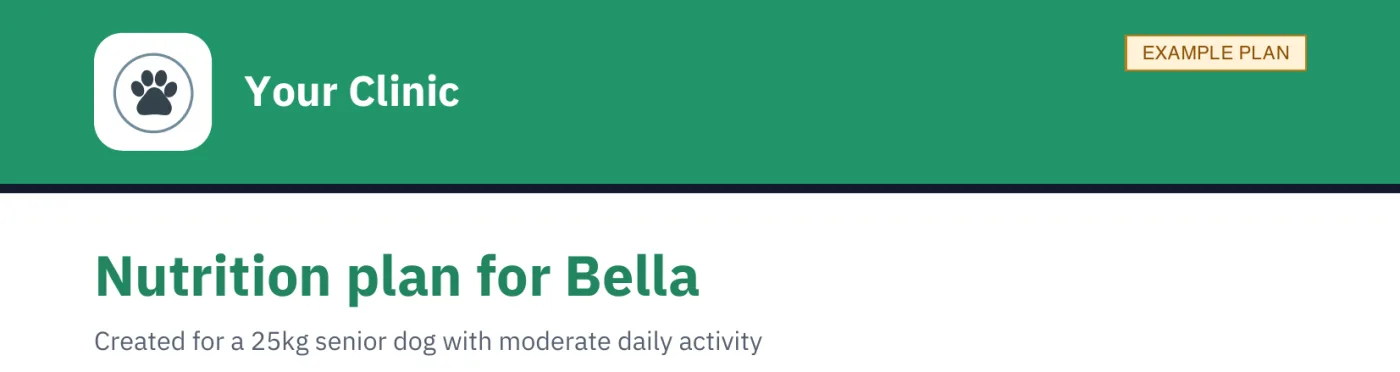
2. Who the plan is for
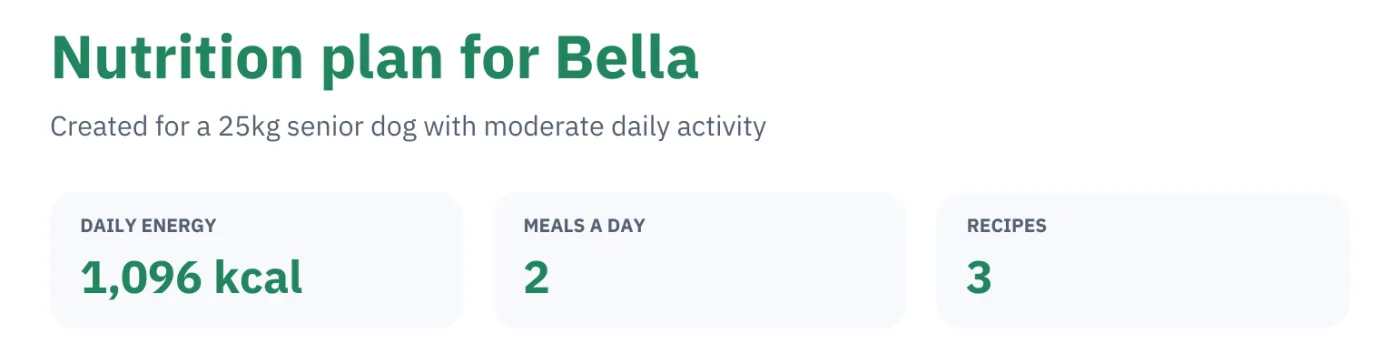
One line under the title says who the plan was written for: the pet’s weight, type and activity level. Boxes under it show the daily energy need, the number of meals a day and the number of recipes. It tells the owner this plan was made for their animal.
3. Three recipes, with every ingredient in grams
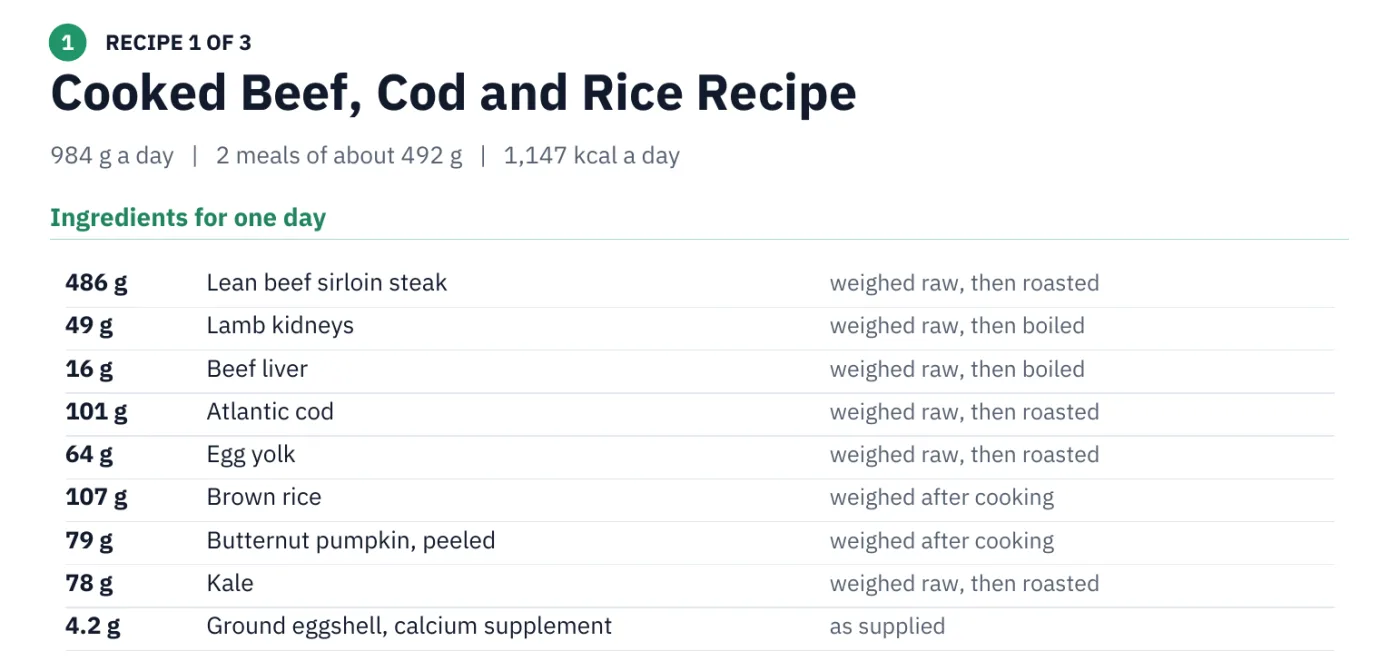
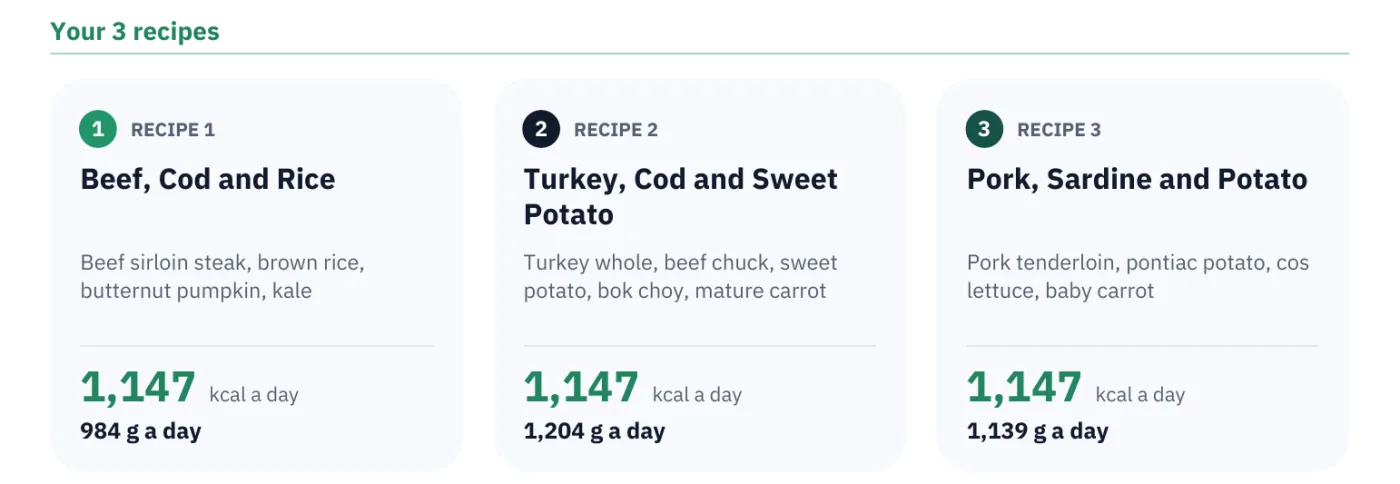
Each plan has three home-cooked recipes tailored to the patient. Each recipe lists every ingredient with its amount in grams.
Ingredients use everyday names an owner will recognise at the supermarket.
4. How to cook it and store it
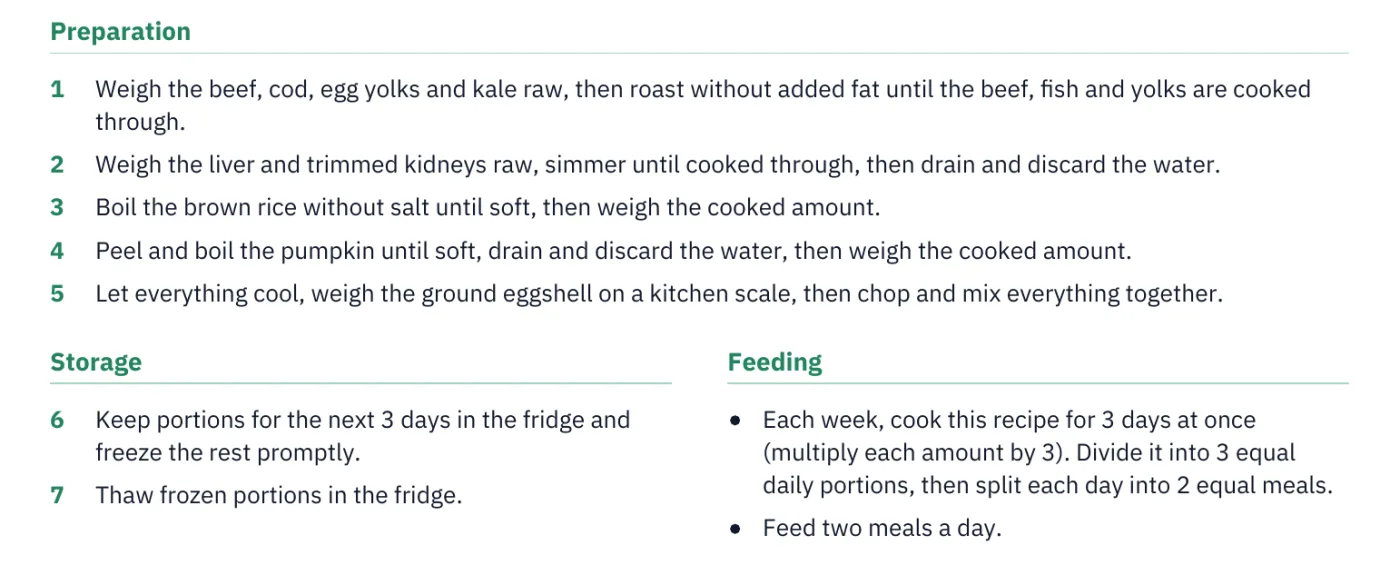
Each recipe has a short set of numbered steps. They are plain instructions for someone cooking at home, not for a clinician.
Storage follows the steps: how to keep the food and how to serve it.
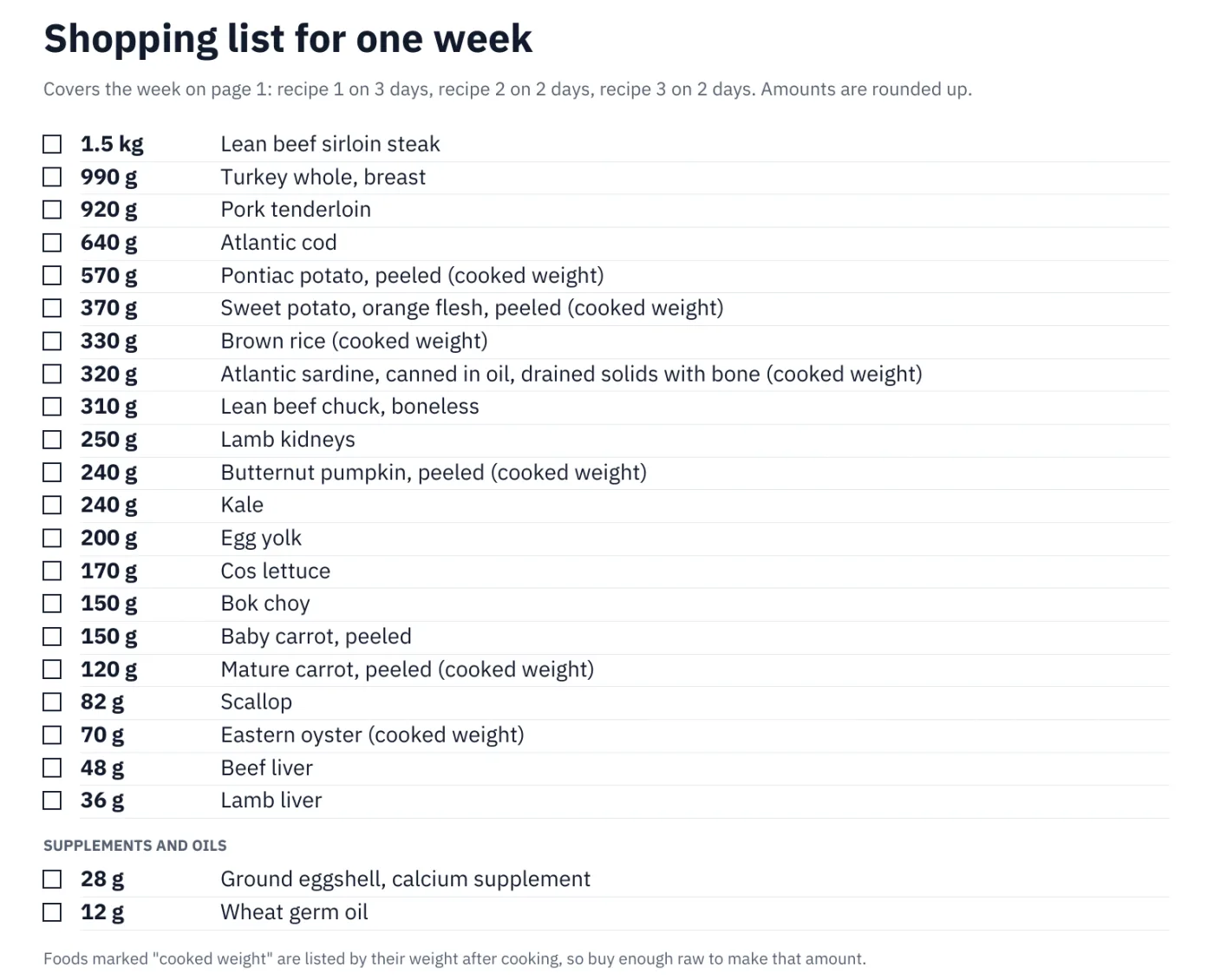
5. A 7-day shopping list
A short list of what the owner needs to buy for a week. It makes the plan easier to start and easier to stick to.
6. Nutrients, in brief and in full
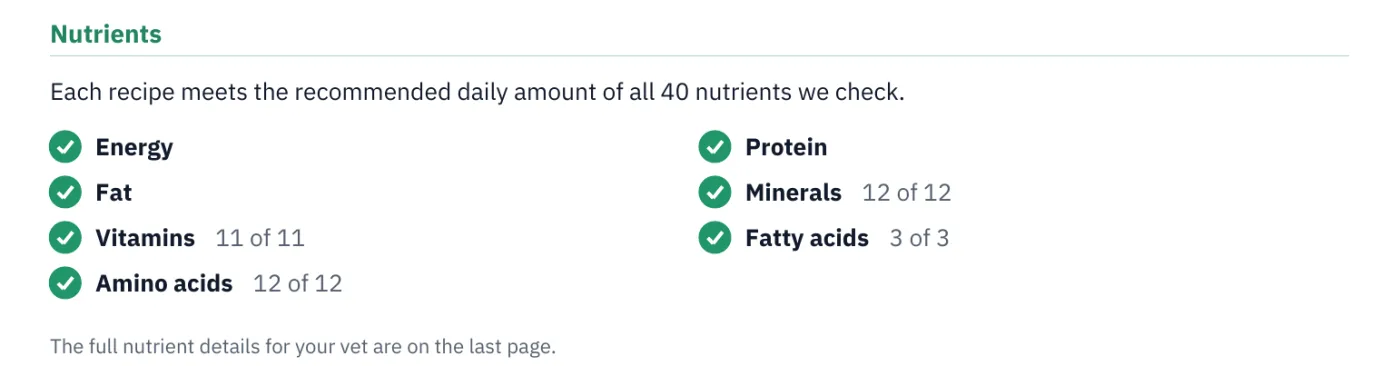
Page 1 has a plain nutrient summary for the owner. One sentence says whether the recipes meet the recommended daily amounts. A checklist follows, with a tick and a count for each nutrient group. If a recipe falls short on a nutrient, that nutrient gets its own line.
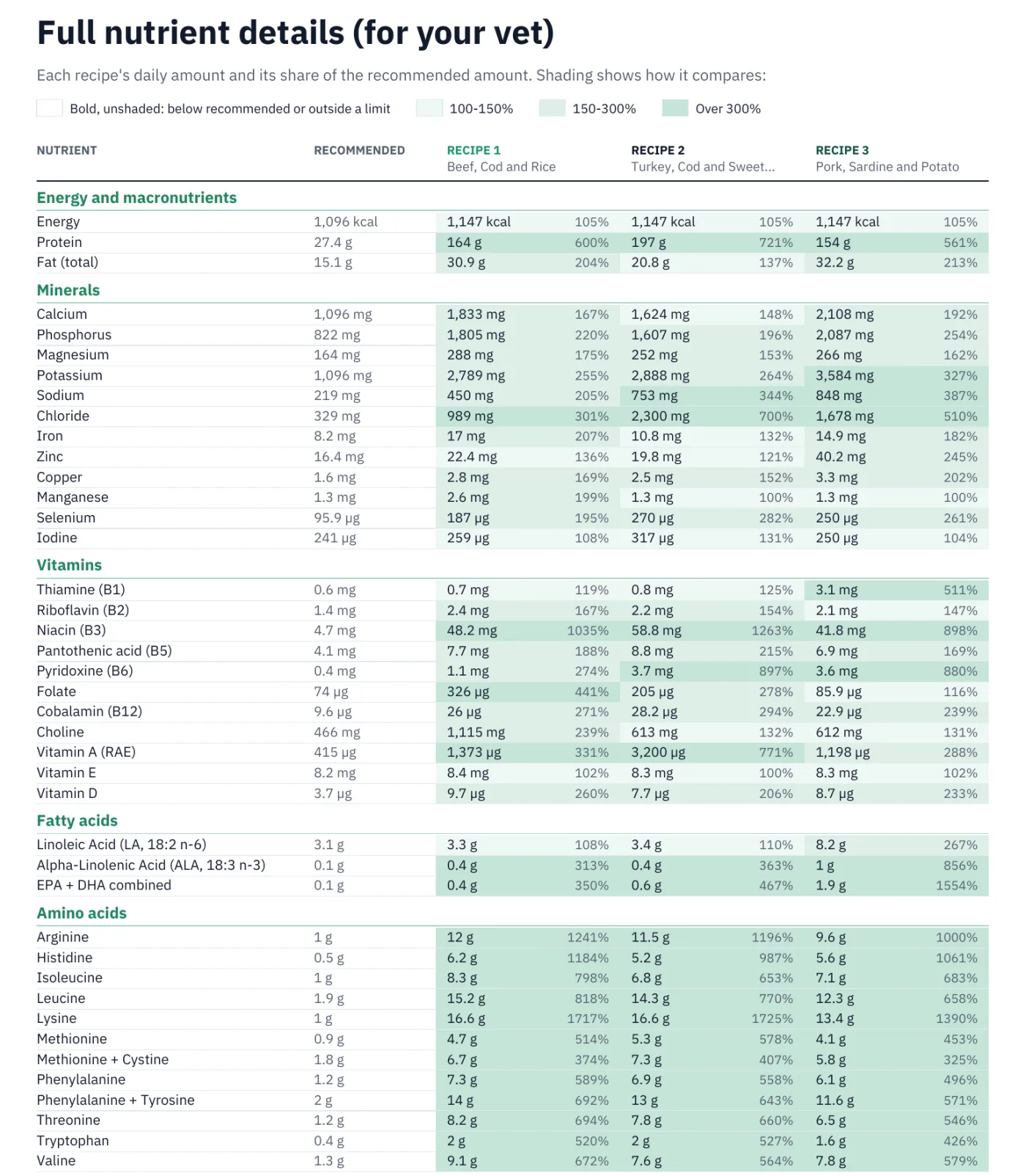
The last page, “Full nutrient details (for your vet)”, is a table. For each nutrient it shows the recommended amount and each recipe’s daily amount and percentage. Shading shows how each amount compares.
Plans are formulated against published nutrient standards: NRC, and FEDIAF or AAFCO. The details page is there for you as much as for the owner.
7. A short note at the end
The plan ends with a short disclaimer. The plan does not replace your advice. You give it to your client and remain their point of contact.

How a plan like this gets made
- 1 Your clinic sends the case: history, bloods, weight, body condition, current diet and the owner’s preferences.
- 2 We formulate three recipes against published nutrient standards.
- 3 Our nutrition team checks the plan before delivery.
- 4 We aim to return it within 1–2 business days of a complete profile.
Unlimited follow-ups for the delivered nutrition plan are included. If your client has questions or you want something changed, send it back to us.
Want one for your own patients?
Each case is A$50 including GST. Tell us about your clinic and we will discuss onboarding.
Enquire for your clinicAccess is currently by invitation.